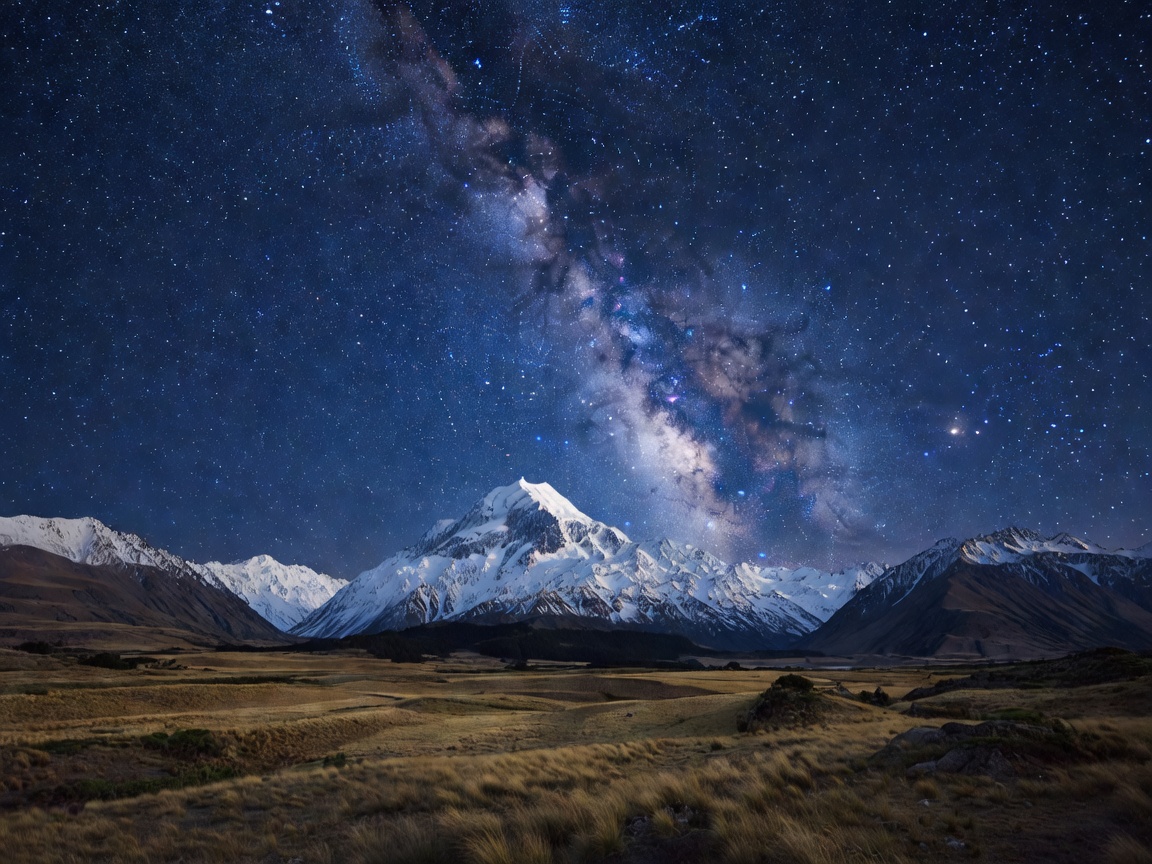
Observation Field Overview
Established in 2012, the Aoraki Mackenzie International Dark Sky Reserve is the largest dark sky reserve in the Southern Hemisphere. Spanning 4,300 square kilometers, the reserve is strictly protected by local lighting ordinances that mandate low-pressure sodium lamps and shielded fixtures across Tekapo, Mount Cook Village, and Twizel.
Prime Astronomical Targets
- Large and Small Magellanic Clouds: Irregular dwarf galaxies orbiting the Milky Way, easily visible to the naked eye.
- Carina Nebula (NGC 3372): Massive star-forming region four times larger than Orion.
- Alpha Centauri: The closest star system to Earth, positioned high in the southern night sky.
- The Coal Sack Nebula: Famous dark absorption nebula silhouetted against the dense Milky Way background.
Field Logistics & Access
The primary observation hubs are located around the shores of Lake Tekapo and Mount John Observatory. Night access to Mount John is restricted to authorized astronomy tours to maintain complete dark sky protocol, though public laybys along State Highway 8 offer pristine Bortle 1 conditions.
Site Specifications
Bortle Class Rating
Class 1 (True Dark Sky)
Coordinates
43.9856° S, 170.4652° E
Elevation
1,029 m / 3,375 ft
Average Clear Nights
215 per year
Best Season
April to September (Southern Winter)
SQM Reading
21.85 mag/arcsec²