Narrowband Filters: H-Alpha & OIII
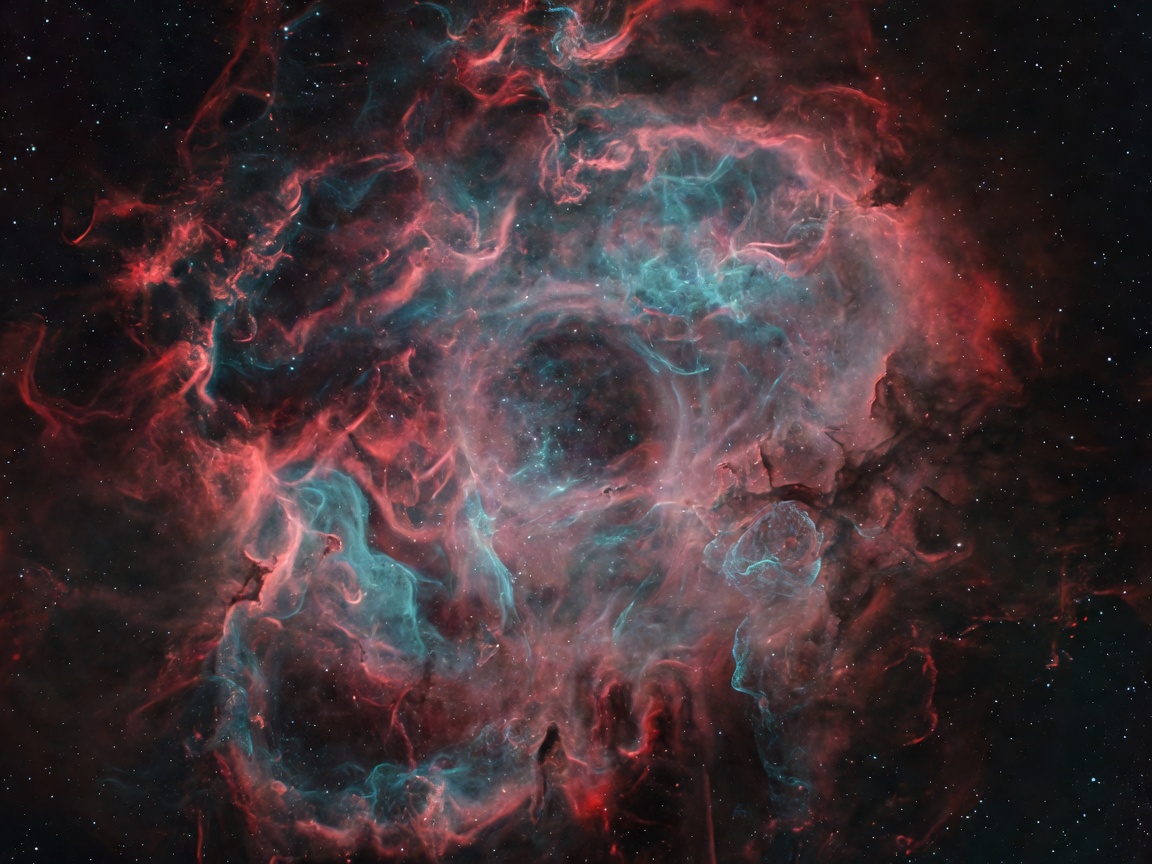
Light pollution from sodium vapor and LED streetlights severely limits deep-sky imaging in urban centers. Narrowband filters solve this problem by isolating specific wavelengths emitted by ionized gas clouds, rejecting virtually all ambient light clutter.
Key Emission Wavelengths
- Hydrogen-Alpha (Hα - 656.3nm): The primary emission line of ionized hydrogen in star-forming regions, responsible for deep red structures in nebulae like the Veil or Rosette.
- Oxygen-III (OIII - 500.7nm): Emitted by doubly ionized oxygen in high-energy planetary nebulae and supernova remnants, yielding intense teal/cyan hues.
- Sulfur-II (SII - 672.4nm): Deep red emission line used alongside Hα and OIII to form the iconic Hubble Palette (SHO).
Bandwidth Selection: 3nm vs 7nm
Narrowband filters are classified by full width at half maximum (FWHM) bandwidth. A 3nm filter provides extreme light pollution rejection and star size reduction, whereas a 7nm filter offers lower cost and compatibility with faster camera lenses without severe haloing.