Telescope Optics for Deep-Sky Observation
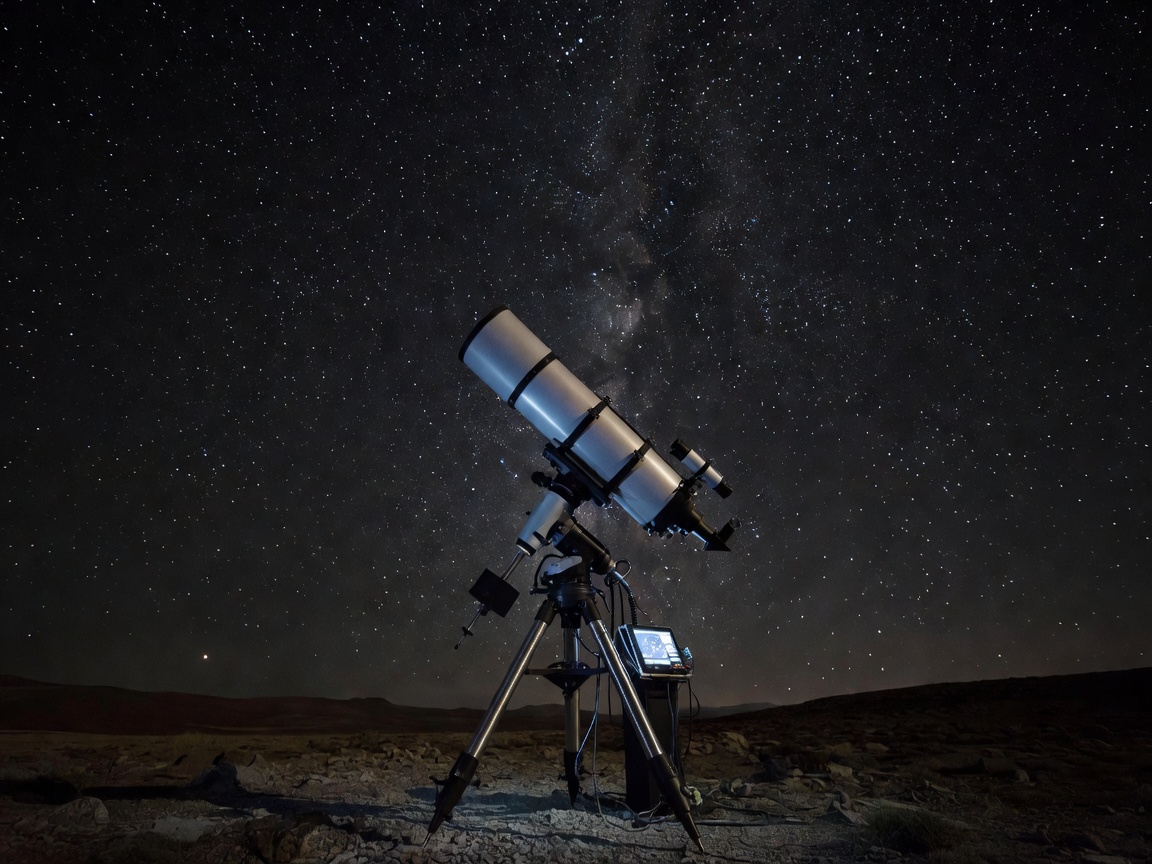
Observing faint deep-sky targets—such as emission nebulae, distant galaxy clusters, and planetary nebulae—requires a thorough understanding of telescope aperture, focal length, chromatic aberration correction, and optical design efficiency.
Aperture Is Paramount
The primary function of a telescope is not magnification, but light collection. Light-gathering power increases quadratically with aperture diameter. An 8-inch (203mm) mirror collects roughly 840 times more light than the human eye, enabling faint structure in targets like the Orion Nebula (M42) or Andromeda Galaxy (M31) to become vivid.
Optical Designs Compared
| Telescope Type | Best For | Pros | Cons |
|---|---|---|---|
| Apochromatic Refractor (APO) | Wide-field Astrophotography | Razor-sharp contrast, pinpoint stars, zero collimation maintenance | High cost per millimeter of aperture |
| Newtonian Reflector / Dobsonian | Visual Deep-Sky Observing | Maximum aperture value per dollar, zero false color | Requires periodic mirror collimation |
| Schmidt-Cassegrain (SCT) | Planetary & Small Deep-Sky | Compact tube length, versatile long focal reach | Slower focal ratios (f/10) require long exposures |
Mount Stability and Equatorial Tracking
Even the finest optics will yield blurry images without a solid mount. For visual deep-sky observing, a heavy-duty alt-azimuth or Dobsonian mount provides rapid setup. However, long-exposure astrophotography demands a German Equatorial Mount (GEM) or Strain-Wave mount capable of precise sidereal tracking to counteract Earth's diurnal rotation.